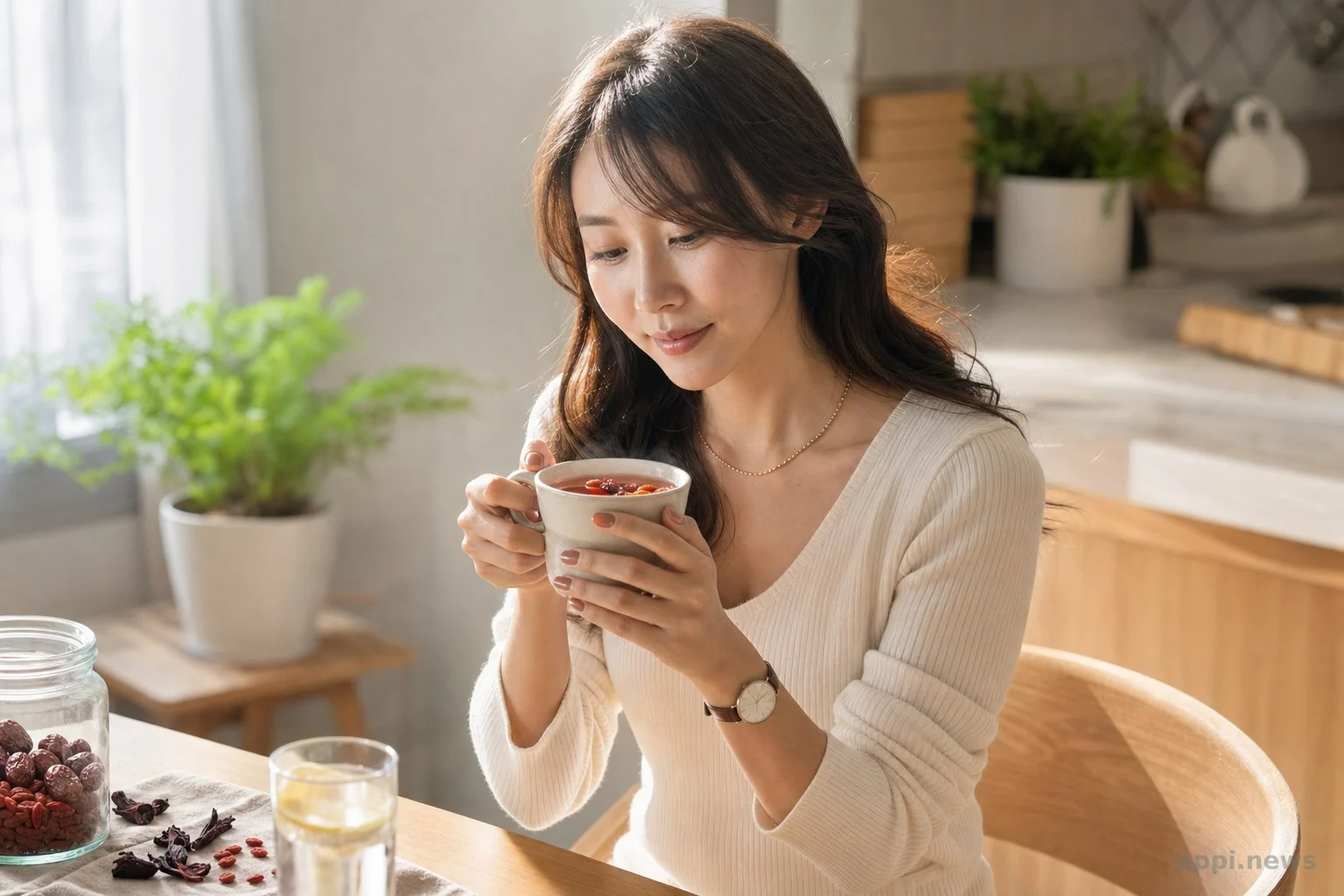
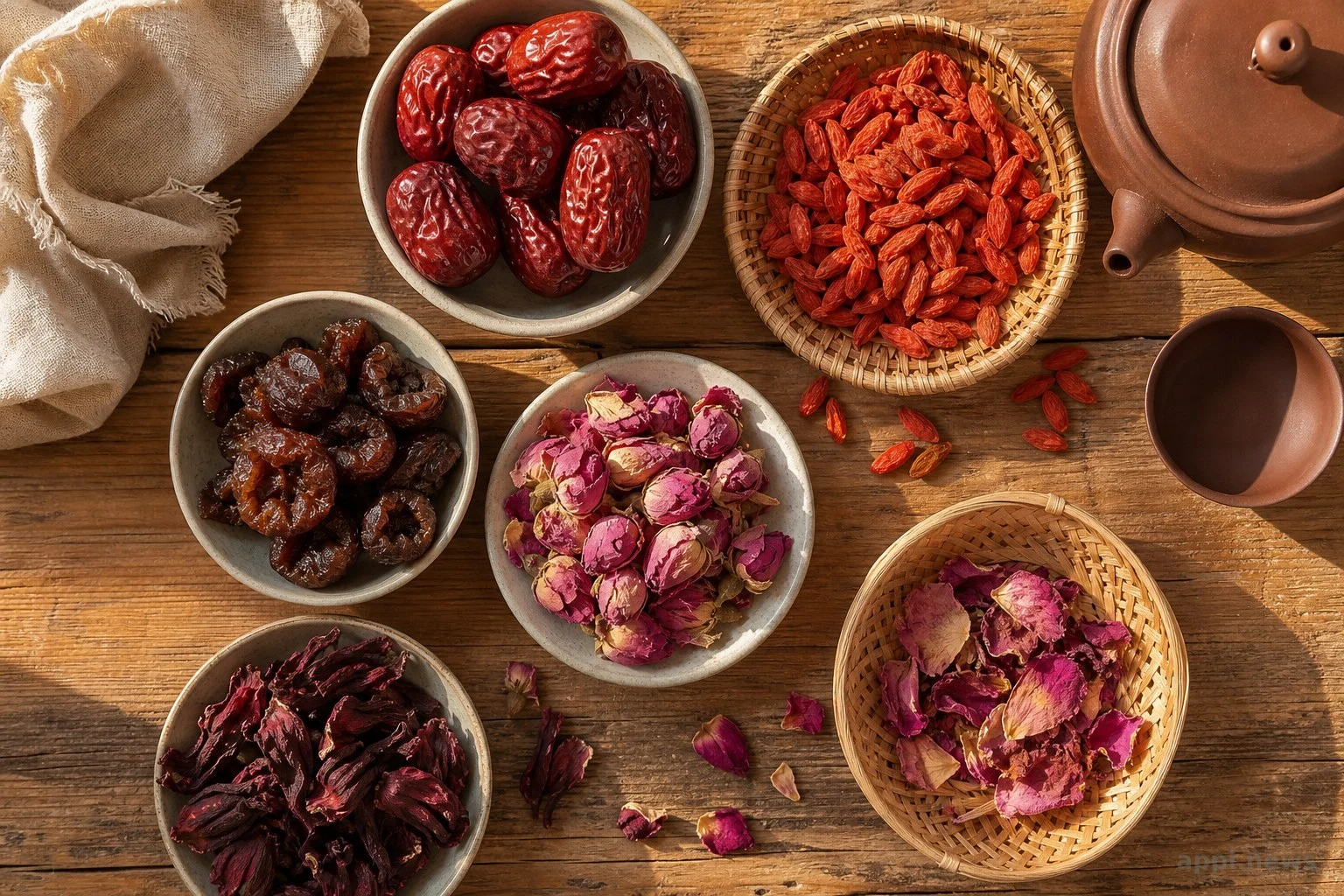
莓果類與花果茶常見成分,大多富含花青素與多酚類化合物,這類物質的作用機制,是透過捐出電子中和自由基,減少活性氧對細胞、蛋白質與 DNA 的傷害。以洛神花(Hibiscus sabdariffa)為例,2022 年一篇發表於《Molecules》的研究分析了洛神花萃取物中的「洛神酸」,發現它能有效降低細胞外 ATP 分泌與羰基蛋白產生,並維持皮膚細胞內還原型與氧化型麩胱甘肽的平衡(註2)。玫瑰果(rosehip)則因為富含維生素 C 與多種生物活性化合物,在 2024 年一篇皮膚科應用回顧中被歸類為具潛力的局部保養原料,作者指出相關證據多來自外用途徑;至於花果茶常見的口服飲用方式,目前仍缺乏對等的研究支持,相關作用機制仍需要更多深入研究才能確立(註3)。
Léger D, et al. (2022). “You look sleepy…” The impact of sleep restriction on skin parameters and facial appearance of 24 women. Sleep Medicine. https://pubmed.ncbi.nlm.nih.gov/34971928/
Wang D, Nagata M, Matsumoto M, Amen Y, Wang D, Shimizu K. (2022). Potential of Hibiscus sabdariffa L. and Hibiscus Acid to Reverse Skin Aging. Molecules, 27(18). https://pmc.ncbi.nlm.nih.gov/articles/PMC9504376/
Oargă Porumb DP, Cornea-Cipcigan M, Cordea MI. (2024). Unveiling the mechanisms for the development of rosehip-based dermatological products: an updated review. Frontiers in Pharmacology, 15. https://pubmed.ncbi.nlm.nih.gov/38666029/
Palma L, Marques LT, Bujan J, Rodrigues LM. (2015). Dietary water affects human skin hydration and biomechanics. Clinical, Cosmetic and Investigational Dermatology. https://pubmed.ncbi.nlm.nih.gov/26345226/
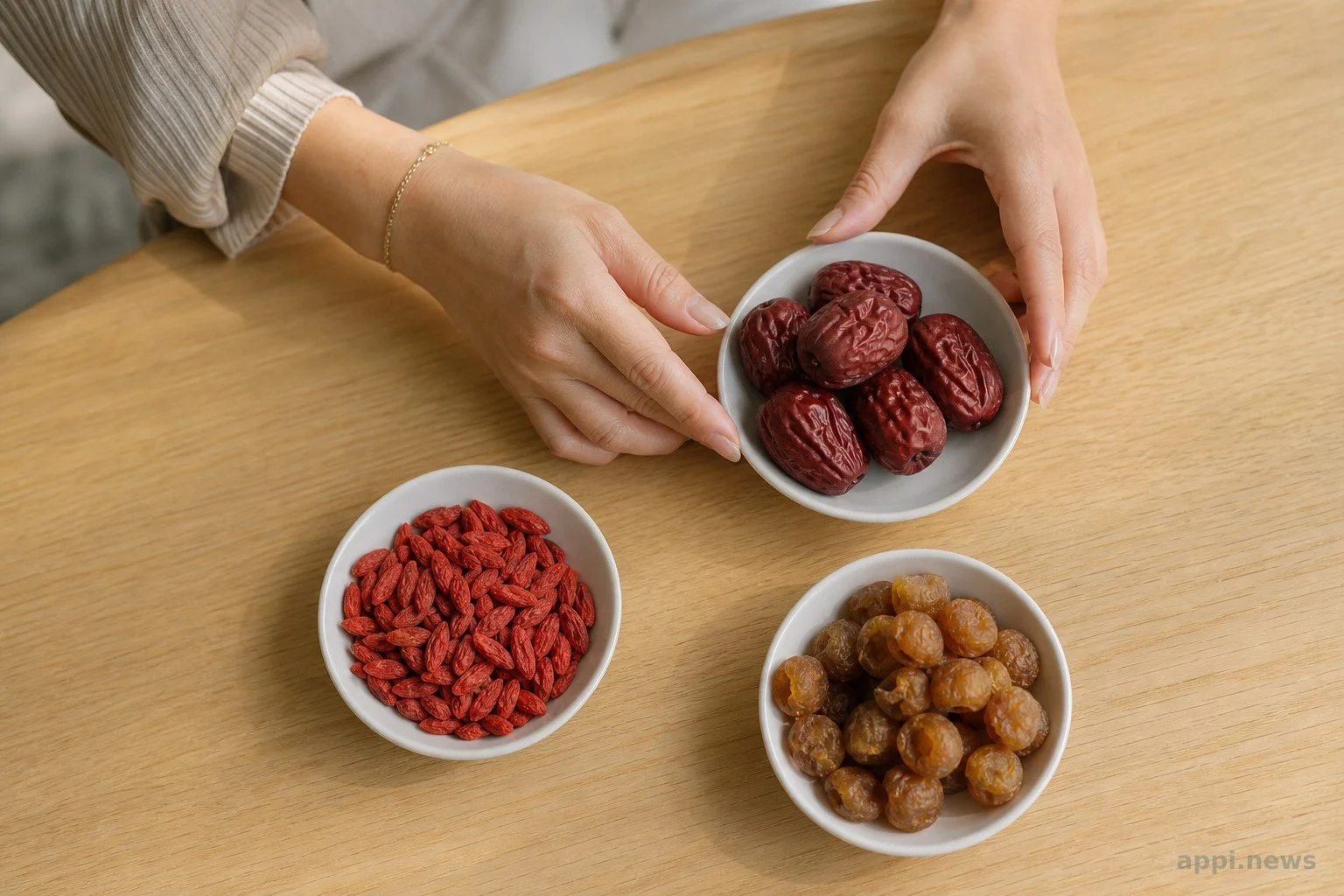
以枸杞為例,一項發表於《Photochemistry and Photobiology Sciences》的動物實驗發現,飲用含5%枸杞汁的小鼠,在接受模擬紫外線照射後,皮膚的發炎腫脹反應明顯減輕,研究團隊認為這與體內兩種保護蛋白(血基質氧化酶-1與金屬硫蛋白)被活化有關(註3)。這類研究說明的是「機轉上合理」,也就是枸杞裡的成分確實能啟動身體對抗氧化壓力的路徑,但動物實驗的劑量與人體日常飲用的份量並不相同,不能直接畫上等號。
Kou X, et al. (2015). Quantitative assessment of bioactive compounds and the antioxidant activity of 15 jujube cultivars. Food Chemistry, 173, 1037-1044. https://pubmed.ncbi.nlm.nih.gov/25466122/
Zhao ZQ, et al. (2025). Longan Arillus: A comprehensive review of botany, traditional uses, phytochemistry, pharmacologic activities, pharmacokinetics, quality control, toxicity, and clinical applications. Journal of Ethnopharmacology. https://pubmed.ncbi.nlm.nih.gov/40505758/
Reeve VE, et al. (2010). Mice drinking goji berry juice (Lycium barbarum) are protected from UV radiation-induced skin damage via antioxidant pathways. Photochemistry and Photobiology Sciences, 9(4), 601-607. https://pubmed.ncbi.nlm.nih.gov/20354657/