Mazur D, et al. (2024). Impact of Maternal Body Composition, Hydration, and Metabolic Health on Breastfeeding Success: A Comprehensive Review. Medical Science Monitor. https://pmc.ncbi.nlm.nih.gov/articles/PMC11536699/
Santos IS, Matijasevich A, Domingues MR. (2012). Maternal caffeine consumption and infant nighttime waking: prospective cohort study. Pediatrics. https://pubmed.ncbi.nlm.nih.gov/22473365/
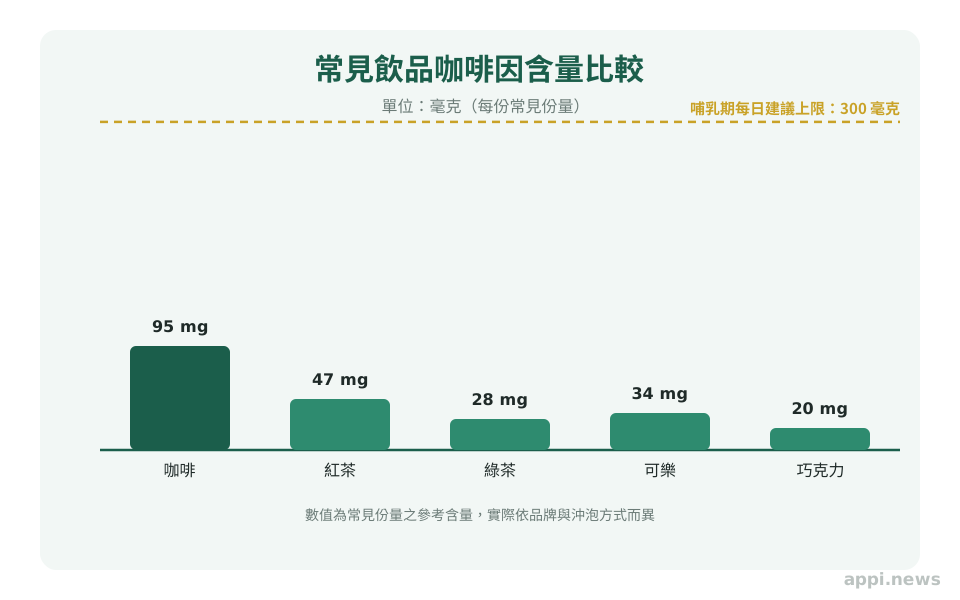
咖啡因會讓血管收縮、也可能干擾睡眠品質,這兩件事剛好都跟經前症候群(PMS)常見的腫脹、失眠、情緒起伏沾得上邊,所以「經期少喝咖啡因」長期以來被當成一種常識性建議。但把研究攤開來看,答案沒有想像中一致。一項針對護理師健康研究(Nurses’ Health Study II)超過三千六百人的前瞻性研究發現,咖啡因攝取量與 PMS 的發生並沒有明顯關聯,研究者甚至指出,要求女性減少咖啡因來預防 PMS,證據其實並不充分(註1)。另一方面,也有研究觀察到偏高攝取量(例如一天八到十杯咖啡因飲品)與症狀嚴重度之間存在劑量相關的趨勢。
Purdue-Smithe AC, Manson JE, Hankinson SE, Bertone-Johnson ER. (2016). A prospective study of caffeine and coffee intake and premenstrual syndrome. American Journal of Clinical Nutrition, 104(2), 499-507. https://pubmed.ncbi.nlm.nih.gov/27385613/
Peacock A, et al. (2018). Adherence to the Caffeine Intake Guideline during Pregnancy and Birth Outcomes: A Prospective Cohort Study. Nutrients, 10(3), 319. https://pmc.ncbi.nlm.nih.gov/articles/PMC5872737/
Zimmer S, Kirchner G, Bizhang M, Benedix M. (2015). Influence of various acidic beverages on tooth erosion. Evaluation by a new method. PLoS One, 10(6), e0129462. https://pubmed.ncbi.nlm.nih.gov/26035729/
Iyare EE, Adegoke OA. (2008). Mechanism of the delayed puberty onset in offspring of rats that consumed aqueous extract of Hibiscus sabdariffa during pregnancy. Nigerian Journal of Physiological Sciences. https://pubmed.ncbi.nlm.nih.gov/19434218/