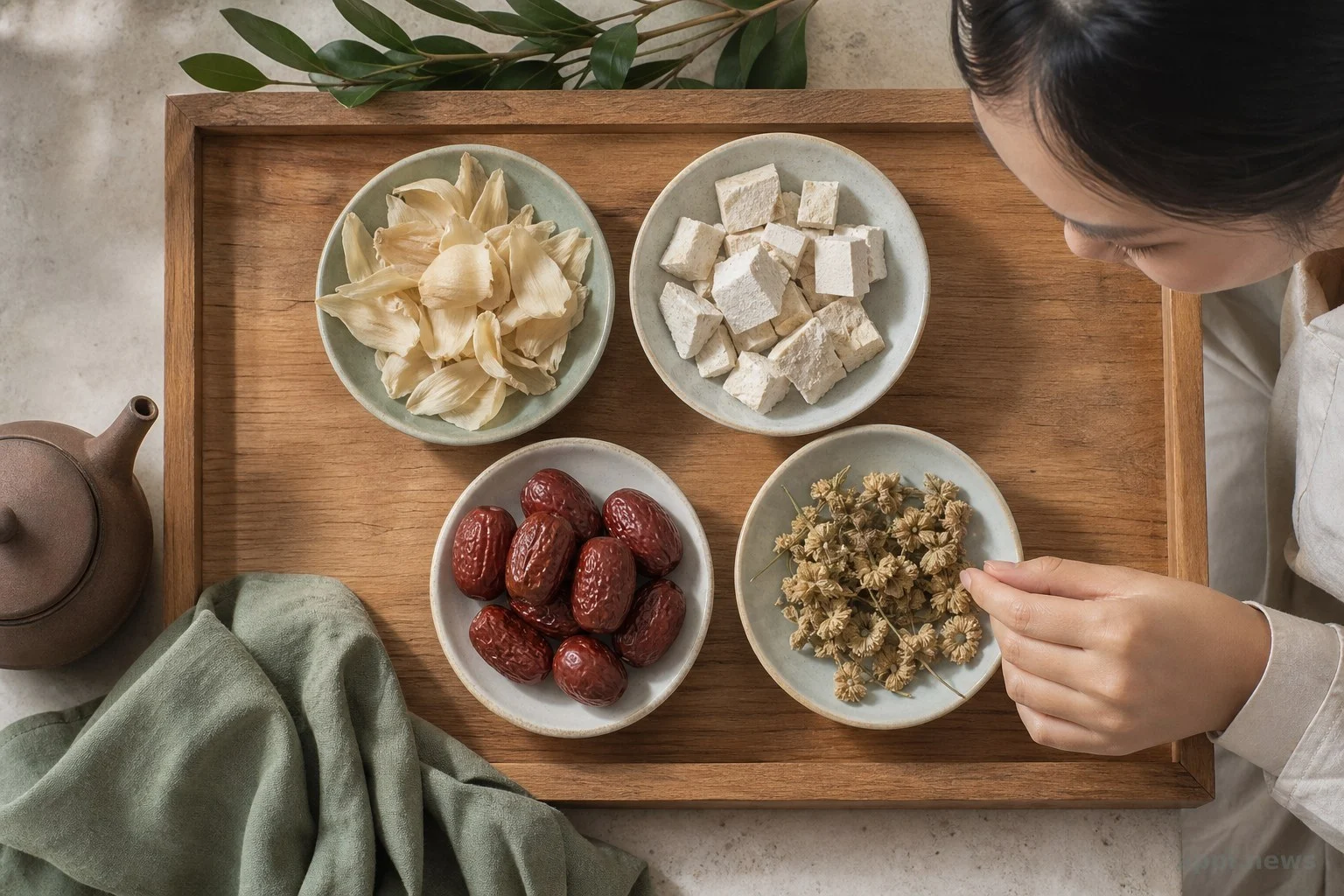
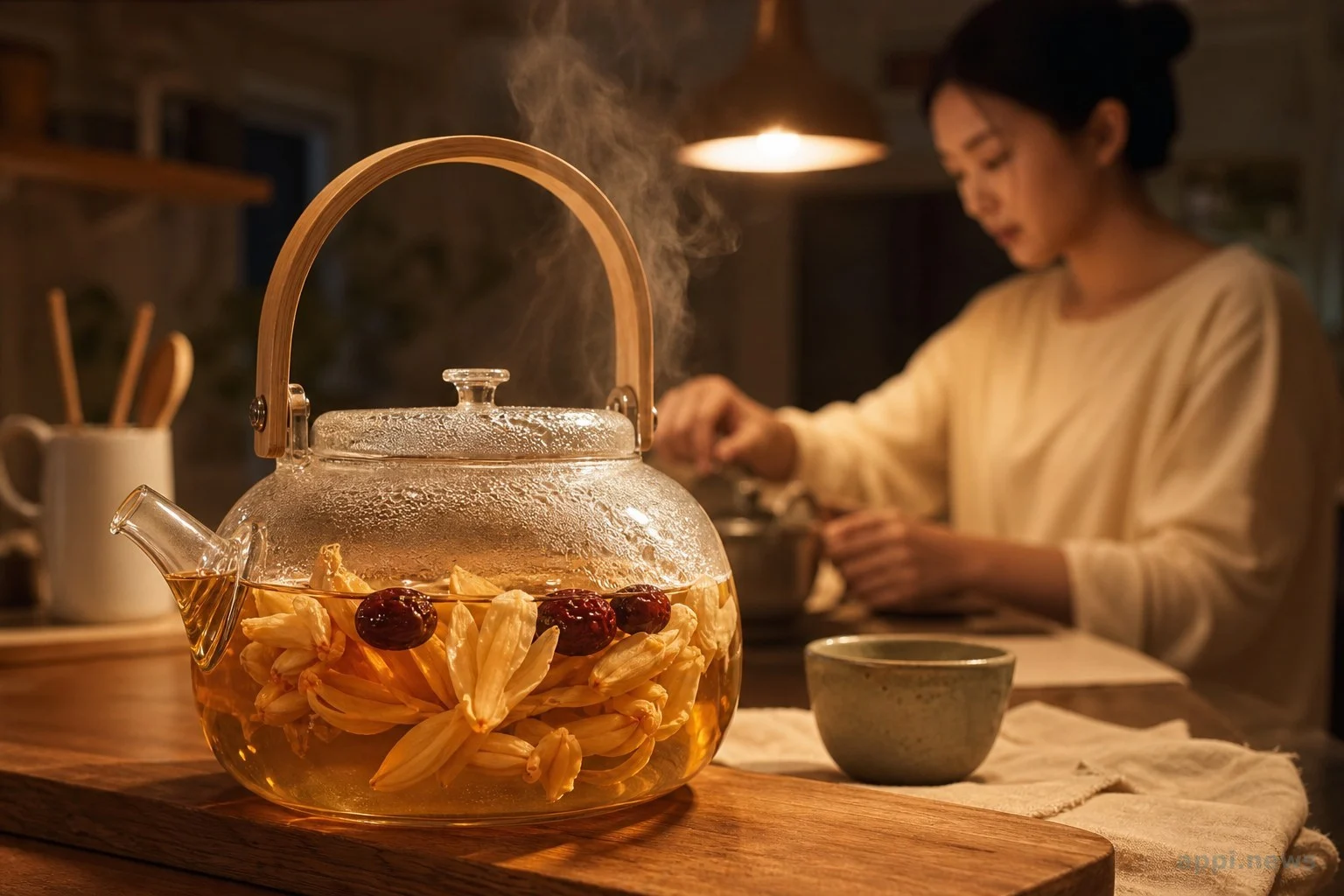
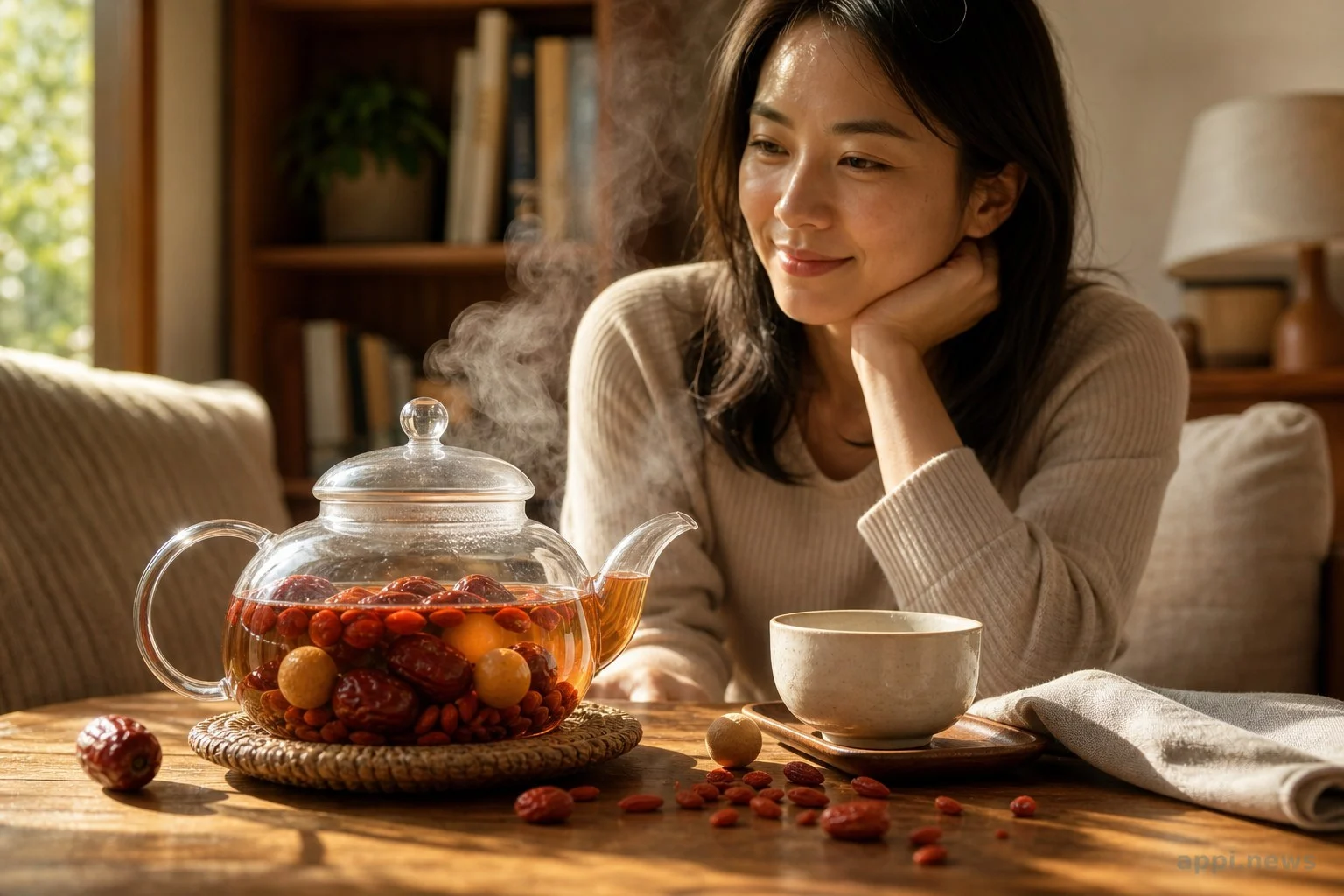
先說茯神。茯神是茯苓的一種,指的是附著在松樹根部生長的那部分菌核,古人認為這個部位「抱木而生」,安神效果比一般茯苓更明顯,因此在安神類方劑裡經常特別指定用茯神而非茯苓。現代研究這幾年對茯苓(Poria cocos)複方有一些觀察,2024 年一項發表於《Journal of Traditional and Complementary Medicine》的研究,測試了茯苓與蟲草米的複合製劑,發現在動物模型中,這個組合可能透過降低發炎指標、調節血清素與多巴胺相關反應,改善憂鬱與焦慮相關的行為表現(Huang et al., 2024)。同樣要提醒的是,這是複方與動物實驗的結果,不能直接等同於「喝茯神茶就有這個效果」。
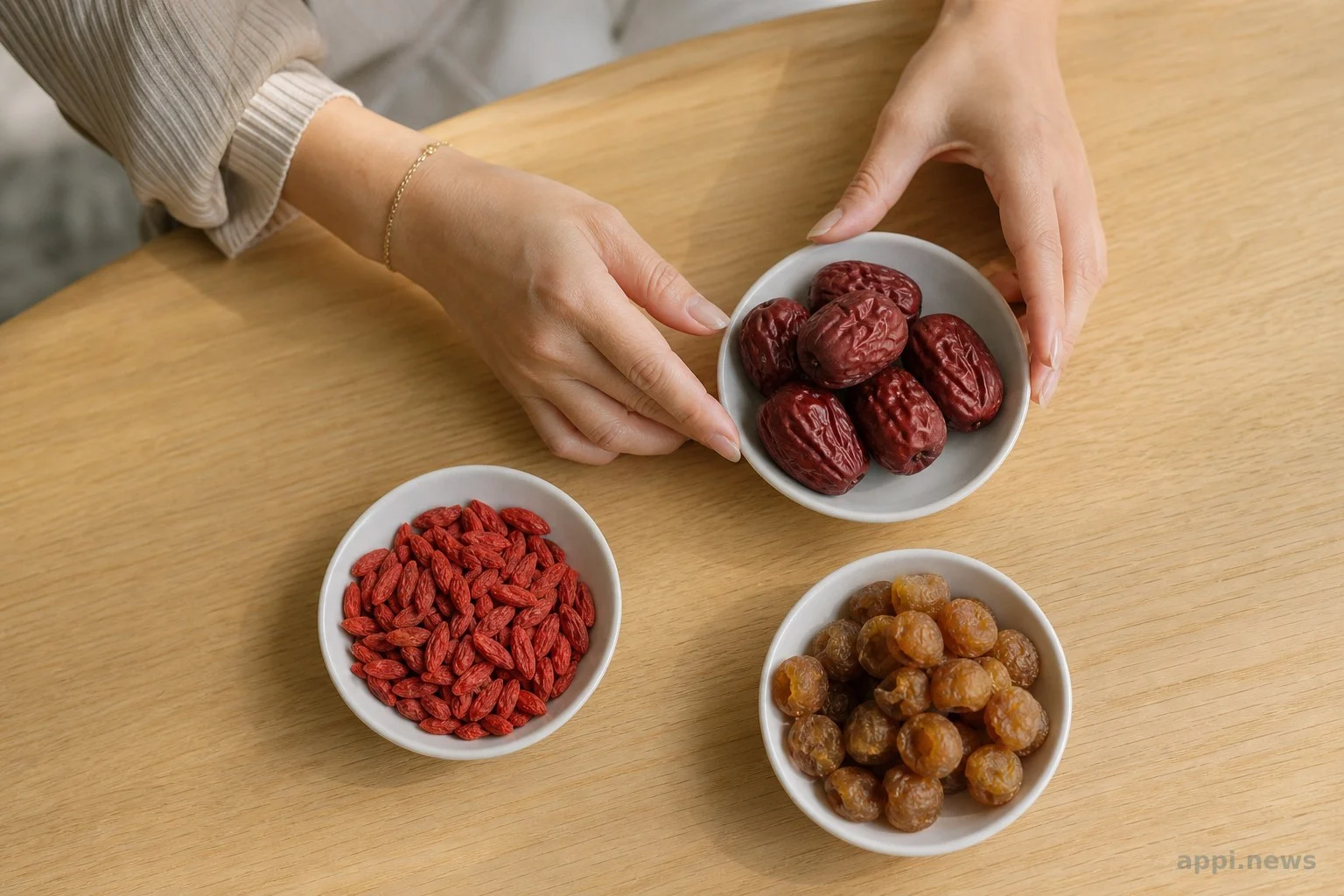
再來是紅棗,這裡有一個常被混淆的地方,值得特別說清楚。傳統經典《金匱要略》裡的甘麥大棗湯,用甘草、小麥、大棗(也就是紅棗)治療「臟躁」,也就是情緒不穩定、無故悲傷欲哭的狀態,這是紅棗在安神類配伍裡最經典的文獻出處。但市面上多數與「棗仁助眠」相關的科學研究,測試的是酸棗仁,也就是另一個物種(酸棗,Ziziphus spinosa)的種仁,跟紅棗(大棗,Ziziphus jujuba 的果實)是不同的藥材,兩者性味與傳統定位也不完全一樣。2020 年一項發表於《Sleep Medicine》的系統性回顧與統合分析,針對以酸棗仁為主的酸棗仁湯進行評估,發現它在改善睡眠品質上優於安慰劑,效果與部分苯二氮平類藥物相當,但作者也坦言,這個領域研究的方法學品質普遍偏低,仍需要更嚴謹的臨床試驗才能下更肯定的結論(Birling et al., 2020)。如果你在安神茶包裝上看到「紅棗」,它承接的是甘麥大棗湯這條「緩解情緒緊繃」的傳統脈絡,不宜直接套用酸棗仁的研究結果來理解。
一篇 2024 年發表於《Journal of Traditional and Complementary Medicine》的研究指出,茯苓相關複方在動物模型中,可能透過調節發炎反應與神經傳導物質,展現出與情緒穩定相關的效果,但研究團隊也強調這類機轉研究距離臨床應用仍有一段路要走(Huang et al., 2024)。
Mao Q, et al. (2024). Co-decoction of Lilii bulbus and Radix Rehmannia Recens and its key bioactive ingredient verbascoside inhibit neuroinflammation and intestinal permeability associated with chronic stress-induced depression via the gut microbiota-brain axis. Phytomedicine. https://pubmed.ncbi.nlm.nih.gov/38696921/
Huang YJ, et al. (2024). A formulation of combined Poria cocos and Cordyceps militaris rice ameliorates depressive-like effects by downregulating p38 MAPK signaling pathways. Journal of Traditional and Complementary Medicine. https://pubmed.ncbi.nlm.nih.gov/40677543/
Li W, et al. (2025). Chinese herbal medicine for insomnia: A systematic review and network meta-analysis. Medicine (Baltimore). https://pubmed.ncbi.nlm.nih.gov/40826721/
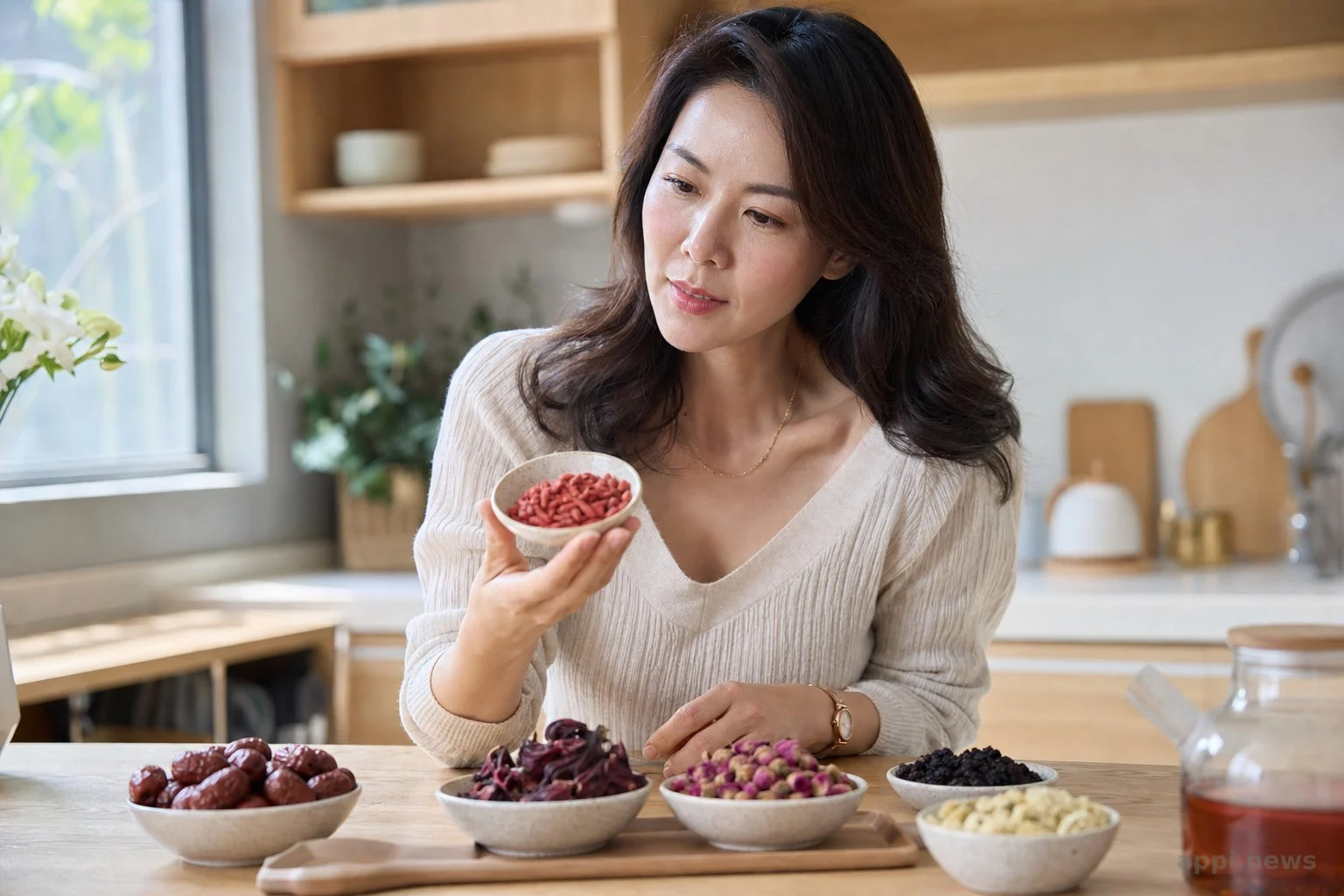
氣色暗沉、眼睛乾澀、熬夜後臉色蠟黃,這些狀態背後往往牽涉睡眠、水分、血液循環與身體氧化壓力等多重因素,很難用單一飲品解釋。美容茶裡常見的紅棗、枸杞、黑醋栗、玫瑰、洛神花、菊花,多數含有花青素或多酚類化合物,這類成分在研究裡被觀察到的方向,主要是協助身體對抗自由基造成的氧化壓力。有研究整理花青素對皮膚的保護機制,指出這類色素具備紫外線過濾能力,並能減弱皮膚細胞內活性氧的生成,屬於皮膚保養的支持性角色,而不是治療性的介入(Correia et al., 2021)。
也有研究把焦點放在眼睛疲勞。一項針對長時間使用電腦螢幕者的隨機雙盲對照試驗發現,連續六週攝取含花青素、蝦紅素與葉黃素的補充食品後,受試者在「對焦困難」與「近距離視物吃力」的自覺評分上出現改善(Kizawa et al., 2021)。
一項針對六百多位消費者的研究發現,消費者對健康宣稱的理解程度,受到自身營養知識、對品牌的信任程度、以及產品資訊呈現方式等因素影響,同一句宣稱在不同人眼中的解讀差異很大(Annunziata et al., 2014)。這也是為什麼美容茶文案特別容易操作模糊地帶:只要寫「富含抗氧化成分」,就算科學上站得住腳,但若延伸成「喝了皮膚會變白」「能治青春痘」「能降眼壓」「能補血」,就已經跨出食品能合法宣稱的範圍,涉及醫療效能的暗示。
Annunziata A, Mariani A, Vecchio R. (2014). Consumer understanding and use of health claims: the case of functional foods. Recent Patents on Food, Nutrition & Agriculture, 6(2), 113-126. https://pubmed.ncbi.nlm.nih.gov/25693912/
Correia P, et al. (2021). Anthocyanin-Related Pigments: Natural Allies for Skin Health Maintenance and Protection. Antioxidants (Basel), 10(7), 1038. https://pubmed.ncbi.nlm.nih.gov/34203482/
Kizawa Y, Sekikawa T, Kageyama M, et al. (2021). Effects of anthocyanin, astaxanthin, and lutein on eye functions: a randomized, double-blind, placebo-controlled study. Journal of Clinical Biochemistry and Nutrition, 69(1). https://pubmed.ncbi.nlm.nih.gov/34376917/
Bucheli P, Vidal K, Shen L, et al. (2011). Goji berry effects on macular characteristics and plasma antioxidant levels. Optometry and Vision Science, 88(2), 257-262. https://pubmed.ncbi.nlm.nih.gov/21169874/
以枸杞為例,一項發表於《Photochemistry and Photobiology Sciences》的動物實驗發現,飲用含5%枸杞汁的小鼠,在接受模擬紫外線照射後,皮膚的發炎腫脹反應明顯減輕,研究團隊認為這與體內兩種保護蛋白(血基質氧化酶-1與金屬硫蛋白)被活化有關(註3)。這類研究說明的是「機轉上合理」,也就是枸杞裡的成分確實能啟動身體對抗氧化壓力的路徑,但動物實驗的劑量與人體日常飲用的份量並不相同,不能直接畫上等號。
Kou X, et al. (2015). Quantitative assessment of bioactive compounds and the antioxidant activity of 15 jujube cultivars. Food Chemistry, 173, 1037-1044. https://pubmed.ncbi.nlm.nih.gov/25466122/
Zhao ZQ, et al. (2025). Longan Arillus: A comprehensive review of botany, traditional uses, phytochemistry, pharmacologic activities, pharmacokinetics, quality control, toxicity, and clinical applications. Journal of Ethnopharmacology. https://pubmed.ncbi.nlm.nih.gov/40505758/
Reeve VE, et al. (2010). Mice drinking goji berry juice (Lycium barbarum) are protected from UV radiation-induced skin damage via antioxidant pathways. Photochemistry and Photobiology Sciences, 9(4), 601-607. https://pubmed.ncbi.nlm.nih.gov/20354657/