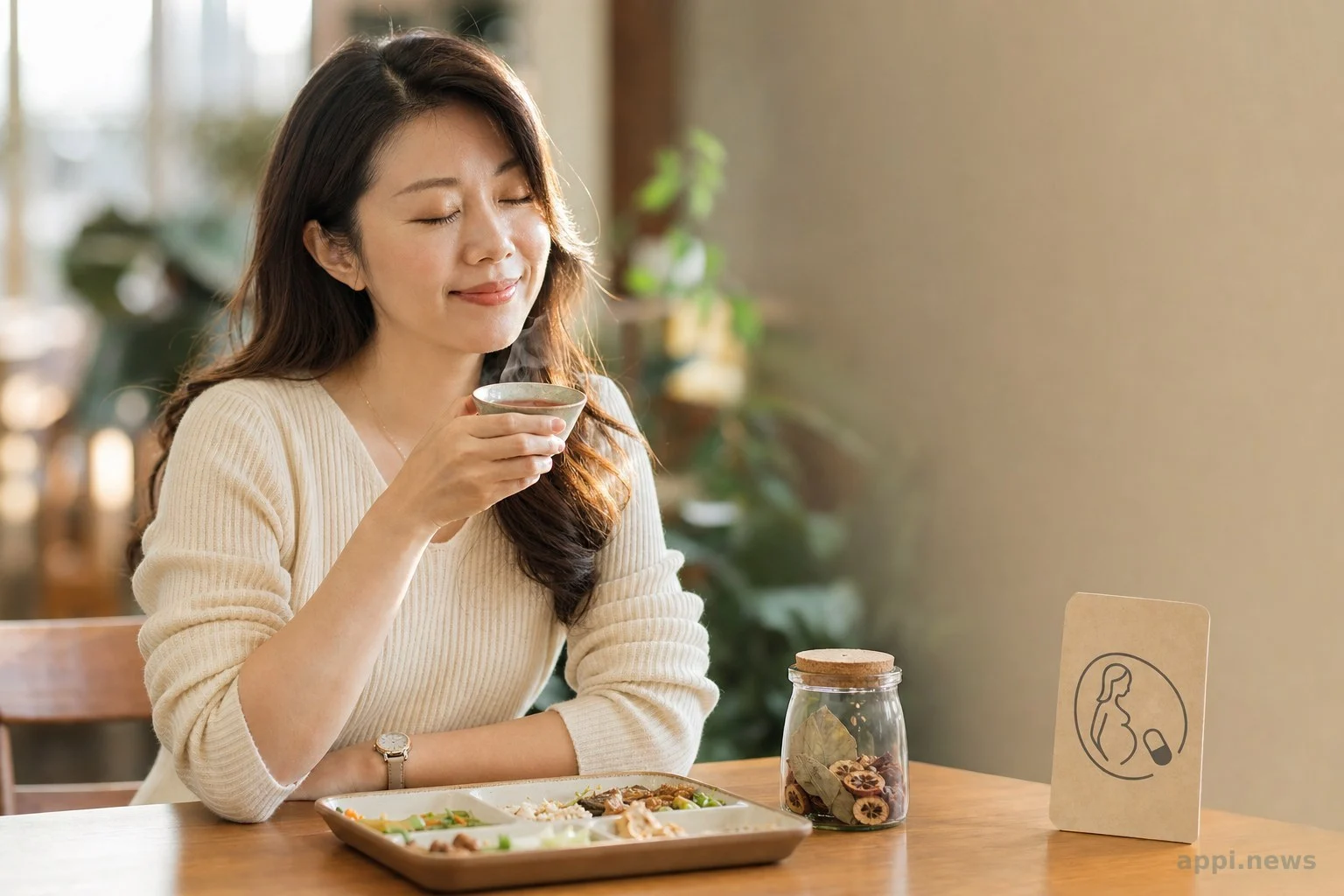
Wu M, Liu L, Xing Y, Yang S, Li H, Cao Y. (2020). Roles and Mechanisms of Hawthorn and Its Extracts on Atherosclerosis: A Review. Frontiers in Pharmacology. https://pubmed.ncbi.nlm.nih.gov/32153414/
Vilas-Boas AA, Correia M, Campos DA, Pintado M. (2026). Upcycled Orange Peel Ingredients for Gastrointestinal and Cardiometabolic Health: A Scoping Review and Market Perspectives. Nutrients. https://pubmed.ncbi.nlm.nih.gov/41978175/
Zhang B, Yue R, Wang Y, et al. (2020). Effect of Hibiscus sabdariffa (Roselle) supplementation in regulating blood lipids among patients with metabolic syndrome and related disorders: A systematic review and meta-analysis. Phytotherapy Research. https://pubmed.ncbi.nlm.nih.gov/31833112/
現代研究對洛神花的關注,多半圍繞在心血管代謝相關的指標。一項針對 25 名心血管風險略高的男性所做的隨機交叉試驗發現,早餐同時飲用洛神花萃取液,相較於單喝水,受試者的餐後血糖、胰島素、三酸甘油酯與 C 反應蛋白反應都較低,血管內皮功能的指標(血流介導擴張)也有顯著改善(註3)。研究團隊認為,洛神花可能是輔助改善血管功能的一種飲食策略,但同時強調這需要更多研究確認。
Ballesio A, Fiori V, Lombardo C. (2025). Effects of Experimental Sleep Deprivation on Peripheral Inflammation: An Updated Meta-Analysis of Human Studies. Journal of Sleep Research. https://pubmed.ncbi.nlm.nih.gov/40474574/
Li CY, et al. (2019). Chemical compositions of chrysanthemum teas and their anti-inflammatory and antioxidant properties. Food Chemistry. https://pubmed.ncbi.nlm.nih.gov/30827670/
Abubakar SM, Ukeyima MT, Spencer JPE, Lovegrove JA. (2019). Acute Effects of Hibiscus sabdariffa Calyces on Postprandial Blood Pressure, Vascular Function, Blood Lipids, Biomarkers of Insulin Resistance and Inflammation in Humans. Nutrients, 11(2), 341. https://pubmed.ncbi.nlm.nih.gov/30764582/
Thondre PS, Lightowler H, Ahlstrom L, Gallagher A. (2021). Mulberry leaf extract improves glycaemic response and insulaemic response to sucrose in healthy subjects: results of a randomized, double blind, placebo-controlled study. Nutrition & Metabolism. https://pubmed.ncbi.nlm.nih.gov/33858439/
2019年發表於《The Journal of Nutrition》的EPIC-InterAct研究,分析了歐洲8個國家的世代資料,結果發現以茶取代每日一份含糖飲料,估計與第二型糖尿病發生率降低約22%有關;以咖啡取代則估計降低約21%,相對之下,用果汁或牛奶取代並沒有觀察到類似的風險下降(註4)。這份研究提醒了一件事:不是所有「換一種飲料」都有一樣的效果,選擇無糖的茶或咖啡,方向上比選擇其他含糖或高熱量替代品更站得住腳。
Zhang B, Yue R, Wang Y, Wang L, Chin J, Huang X, Jiang Y. (2020). Effect of Hibiscus sabdariffa (Roselle) supplementation in regulating blood lipids among patients with metabolic syndrome and related disorders: A systematic review and meta-analysis. Phytotherapy Research. https://pubmed.ncbi.nlm.nih.gov/31833112/
Han X, Zhao W, Zhou Q, Chen H, Yuan J, Zhang X, Zhang Z. (2022). Procyanidins from hawthorn (Crataegus pinnatifida) alleviate lipid metabolism disorder via inhibiting insulin resistance and oxidative stress, normalizing the gut microbiota structure and intestinal barrier, and further suppressing hepatic inflammation and lipid accumulation. Food & Function. https://pubmed.ncbi.nlm.nih.gov/35781311/
Imamura F, et al. (2019). Estimated Substitution of Tea or Coffee for Sugar-Sweetened Beverages Was Associated with Lower Type 2 Diabetes Incidence in Case-Cohort Analysis across 8 European Countries in the EPIC-InterAct Study. The Journal of Nutrition, 149(11). https://pmc.ncbi.nlm.nih.gov/articles/PMC6825826/


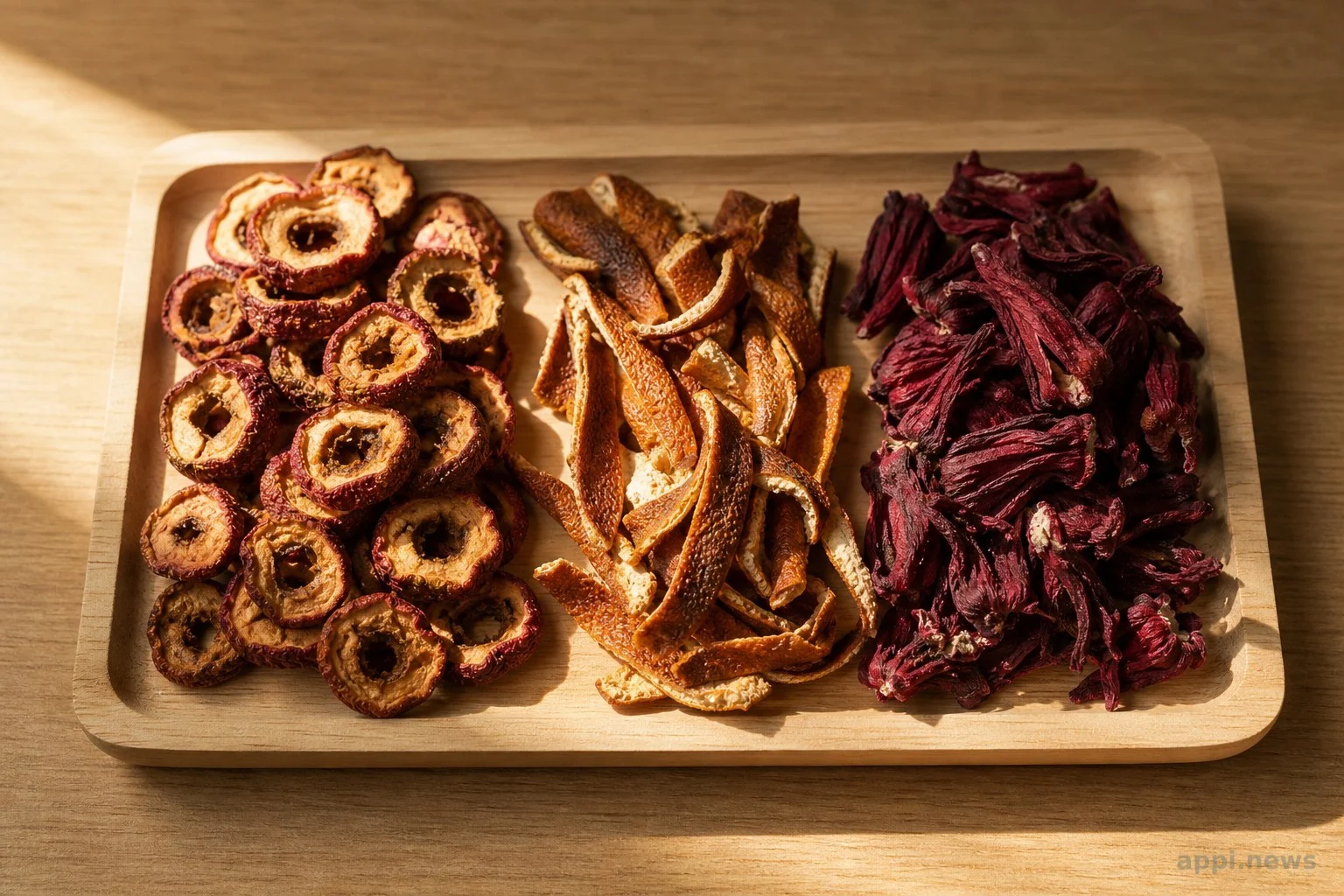




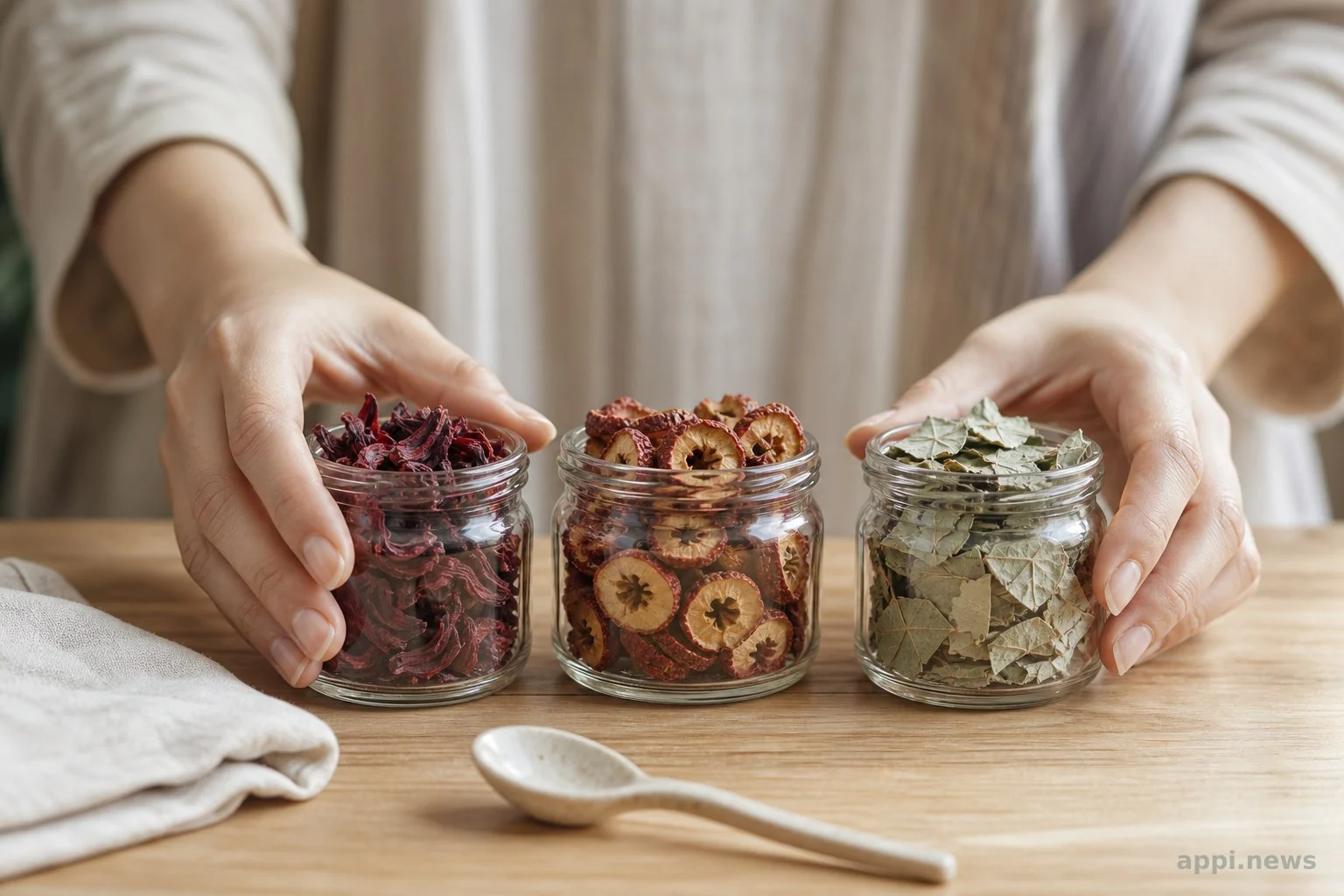 三個玻璃罐分別裝著洛神花乾、山楂片、荷葉乾,並排呈現三種食材的外觀差異值得留意的是,動物實驗的劑量往往遠高於一般泡茶的用量,相關性也不等於因果性,這幾點在解讀「某某食材對代謝有幫助」這類說法時,都值得放在心上。